
Camera Secrets to Capture Your First Stunning Bird Photo
Have you ever spotted a beautiful bird perched on a branch while you were on your morning walk and wished you could freeze the moment forever? Well, you are not alone. Bird photography for beginners can feel like a chase against the wind, but its actually one of the best ways to connect with nature.
In this post, I will discuss how you can get started with your bird photography journey and capture your first stunning bird portrait that you will cherish forever.
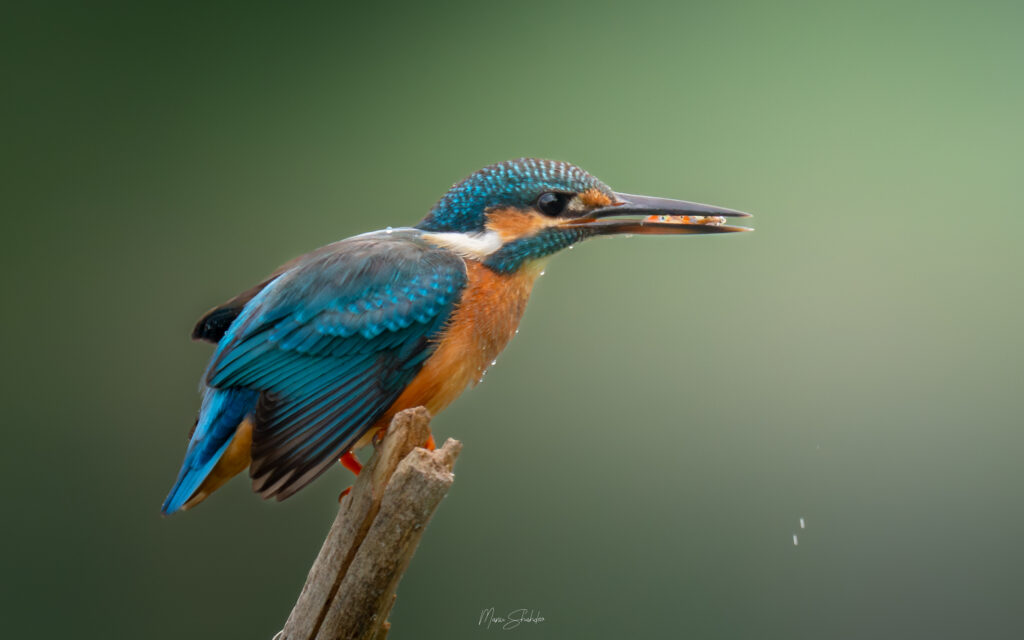
Before we begin, let us first clarify the misconception that most beginners have that is bird photography is expensive. This is NOT ENTIRELY TRUE!!!
While there is no end to the extend to which you can spend on your gears but having a set of basic camera body a decent telephoto lens is more than enough to get started. I started my bird photography journey with a humble apsc camera body from Fujifilm and a telephoto lens Fuji XC 50-230mm.
Instead of focusing on the gears, the focus should be to learn how to make the best use of what you have. Here are some of the essential camera settings that can help you as you begin on this adventure.
This is probably the most critical setting you need to master to freeze motion in bird and wildlife photography. If you have all the other settings on point but a slower shutter speed, it can still result in a “soft” or blurry image. You can follow the below as a guideline to capture sharp bird photos :
- Static Subjects
- Birds in Flight/Action
To summarise, shutter speed depends on the bird size and their movement style as well as their behaviour. A smaller bird with quick movements will need much higher shutter speed as compared to a larger bird with slower movements.
Pro Tip: “A good rule of thumb for beginner in bird photography: when in doubt, double your shutter speed. You can fix the noise, but you can’t fix blur“
Aperture controls the “depth of field”. You must have seen a photo where the subject is perfectly in focus and its features tack sharp, at the same time the background has a “creamy” or “blown-out” feel which makes the subject stand out even more. This effect is often called as “Bokeh” achieved in camera using a wider aperture.
Let us understand what is the best aperture for bird photography:
A simple answer to this would be that the best aperture for bird photography is usually the widest aperture that your lens has. It is usually around f 5.6 or f 6.3 on a beginner friendly and cheaper telephoto lens such as the Sony 200-600 mm or Nikon 180-600 mm or Canon 100-500 mm, whereas it is even wider at f 2.8 or f 4.0 on a heavy duty professional telephoto lens such as Sony 400mm or Sony 600mm or Canon RF600mm. However, there are caveats that you need to understand:
- The depth dilemma: When to open and when to narrow down the aperture
Let us consider a scenario where you are trying to capture a larger bird such as a Pelican or a Stork, then the wider aperture will also narrow down the depth of field. Hence, you might have a sharp beak and an out of focus eye of your bird. In such cases, its best to stop down the aperture to f7.1 or f8 to have a better depth of field and you ensure that your bird appears sharp from tip of the beak till the end of flight feathers.
Pro Tip: “Aperture alone does not create the background blur, the secret ingredient is the distance of the subject from the background”. The further the distance of the subject from the background, the creamier the bokeh will appear.
ISO is your light insurance. It is basically the sensitivity of your camera sensor towards the available light. You increase the ISO, you get better light in your frame and vice versa. In the fast pace world of bird photography this is what enables you to use those lightning fast shutter speed even in low light situations during dawn or dusk or even a cloudy day.
Higher ISO does introduce digital noise in your image, but it can be handled during post processing. Modern cameras have also become quite good in handling noise introduced due to high ISO. I recommend putting the your camera on auto ISO and let your camera handle this for you, while you control the shutter speed and aperture. If you still want to be conservative, I recommend setting the max limit to somewhere around 6400 and control your camera going overboard.
Pro Tip: “An ISO 25600 image of a very rare bird is a trophy, while an ISO 100 blurry image is a trash.” TRUST your sensor!
This is how you create magic and move from taking just record shots to creating a professional looking image. The camera body comes with usually 3 focus modes – AF Single, AF Continuous and Manual Focus. Depending on the camera brand the notation may differ but the idea remains the same.
Should you AF-S or AF-C for bird photography :
- AF-C vs AF-S : Generally the camera body is set to AF-S by default. In this mode once the camera locks focus on the subject, it stays there. This might be well suited in landscape photos but birds don’t stay still at one place, therefore AF-S is a terrible choice for bird photography. AF-C on the other hand is dynamic and the camera constantly adjusts the focus depending on how the bird moves in real time. Modern day camera bodies such as Sony A7M5 among many others are equipped with advanced technology such as Animal/Bird eye focus and having such features can be your super power.
- Complement AF-C with focus area : Pairing your camera’s AF-C mode with a right focus area is the final step to truly master bird photography. The focus area tells the camera where to look, while AF-C tells it how often to look. Here is a cheat sheet :
Bird in a bush : AF-C + Spot Focus Area
Bird in sky : AF-C + Wide/Tracking Focus Area
Bird wading in lake : AF-C + Zone Focus Area
Pro Tip: “How to ensure you capture the bird action every time?” The answer is to always shoot in High-Speed Continuous (Burst Mode)